
Johan Widmark | 2026-02-12 11:00
See intevew with CEO Joachim Samuelsson here (in swedish)
From integration milestone towards commercial delivery
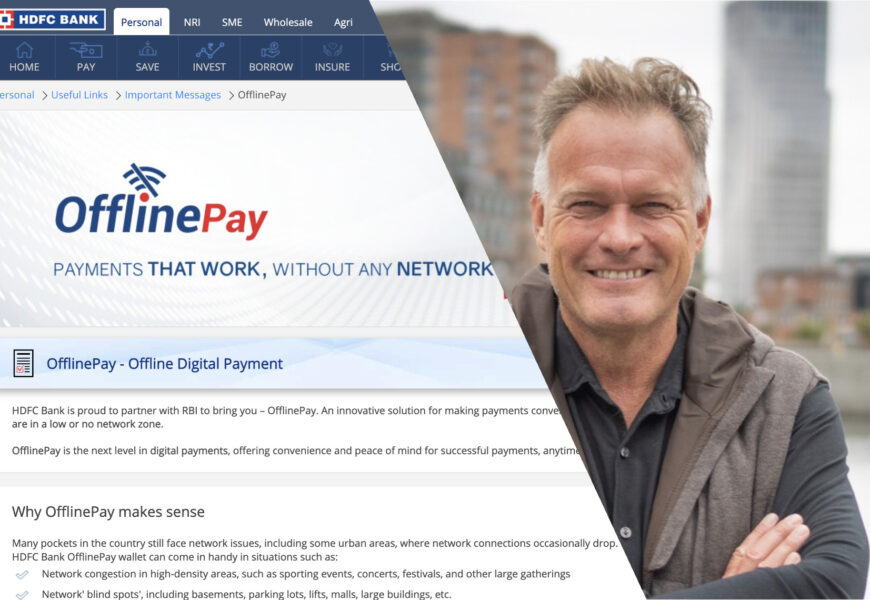
Following last year’s breakthrough integration into India’s payment environment, Crunchfish now operates from a materially stronger reference position. Being embedded at system level provides a platform from which broader deployment can be pursued. The market backdrop is gradually aligning with payment system operators increasingly recognising offline payments as a resilience requirement rather than a niche feature. However, for Crunchfish, architectural clarity and ecosystem validation must now translate into contracts and live roll-outs.
National payment systems fit
Importantly, the dual licensing structure mirrors this architecture: system-wide FRAND licensing for payment operators, combined with service-level licensing where Crunchfish supplies secure offline wallets. This creates a scalable framework in which revenues can be linked to system-level deployment rather than isolated application features. Closed-loop wallets are emerging as an increasingly important system-operator category, particularly in Asia. These platforms combine system-level governance with direct relationships to large user and merchant bases, enabling governed offline payments to be introduced rapidly at scale through a single integration. If executed successfully, such deployments could serve as catalysts for broader national roll-outs.
Funding runway and valuation framework
Following the directed share issue last year, remaining cash amounted to SEK 11.7m at year-end, corresponding to roughly two quarters of operations based on the Q4’25 run-rate. The attached warrants (4m) carry a floating strike set at 80% of the March 2026 VWAP, with a floor of SEK 3.00 and a cap of SEK 4.00, implying potential gross proceeds of SEK 12–16m upon full exercise. At the current share price, the warrants are out of the money and provide no immediate funding certainty, leaving the company reliant on the SEK 10m standby credit facility, which carries a 5% arrangement fee and 1.5% interest per commenced 30-day period if drawn. Maintaining our refined revenue framework, built on assumed ARPU of USD 1.10 across subscription, reservation interest, and credit components, differentiated by PSP size and rollout pace, we see continued support for a rNPV of SEK 5 per share, although this remains highly sensitive to a number of highly speculative assumptions regarding execution timing, adoption pace, and additional capital needs. The coming year will therefore be defined less by architectural milestones and more by the company’s ability to convert its system-level position into sustainable revenues.

DISCLAIMER